

Reminders
Reminders and Updates
This section provides quick and helpful reminders or updates linked to our core expectations at Plymstock School. It’s designed to keep you informed and up to date with the key policies and routines that support a calm, focused, and respectful learning environment. While it doesn’t cover every detail, it highlights the essentials that help all students feel prepared, supported, and ready to succeed. Expand the titles below for more information, and please take a moment to review them so we can continue working together to maintain high standards across our school community.
Behaviour in the community.
As teachers, parents and carers of Plymstock School students, we all play an important part in supporting our young people to represent themselves and our school proudly within the local community. We recognise that the vast majority of our students are considerate, respectful, and a credit to both their families and the school. To continue building on these positive habits, we encourage regular conversations at home about how to behave responsibly in public spaces, whether travelling to and from school, visiting local shops, or spending time with friends in the neighbourhood.
Talking with your child about showing courtesy to others, keeping noise levels appropriate, and disposing of litter responsibly helps reinforce the values we all want to see in our community. It can also be helpful to stay aware of where your child is spending their time, who they are with, and what activities they are involved in, particularly during evenings and weekends. If you notice changes in behaviour or anything that seems unusual, this can be an opportunity to check in with them and offer support.
We value working closely with parents and carers. If you ever have concerns about your child’s friendship groups or feel they may need guidance, please do get in touch, working together ensures we can provide the best possible support. Likewise, if you witness any behaviour in the community that involves Plymstock students and may require our attention, we would appreciate you letting us know so we can respond promptly and constructively. Where necessary, we will work alongside the Child Centred Policing Team to ensure that our community is a safe place for all. By communicating openly and supporting one another, we can help our young people continue to make positive choices and be valued members of the Plymstock and wider community.
ClassCharts Communication
Uniform and Punctuality Intelligience Events
We will be increasing our use of ClassCharts to keep you informed about your child’s uniform and punctuality via email when they meet a threshold for late to school and uniform corrections.
This will help ensure you have timely updates so you can support your child in meeting school expectations.
Creating the Best Conditions for Learning
Spotlight on: Call for Attention
One of our most important routines is the signal we use to gain student attention and silence – we call this our ‘Call for Attention’ routine. When a teacher or member of staff needs the class’s attention, they move to a visible spot, raise a hand, and say: “3, 2, 1… eyes on me.” They scan the room, acknowledge positive behaviour, and wait until everyone is focused. By the time the countdown reaches one, all students are silent and looking toward the teacher. This routine is well established across the school – in classrooms, assemblies, and even during fieldwork.
Why does it matter? This simple, predictable signal helps students switch smoothly between activities, reducing cognitive load so they can concentrate on learning the content and skills that they need to remember, rather than the conditions of learning. Put simply, our Call for Attention routine creates a calm, familiar environment where students feel safe and ready to learn.
DfE Guidance and Affordability
The DfE requires schools to limit compulsory branded uniform items to reduce cost and improve accessibility for families
In response, our uniform has been designed to:
- Keep compulsory branded items to a minimum (maximum of 4)
- Provide flexible, non-branded alternatives
- Ensure value for money and inclusivity for all families financial support for pupil premium and pre-owned uniform options remain available.
Branded and Non-Branded Items (From Sept 2026)
Compulsory branded items:
- School blazer
- School tie
- School skirt (optional choice alongside non-branded trousers/shorts)
- PE top
Non-branded options (widely available):
- Grey trousers or tailored shorts
- Plain shirts, socks, coats, and bags
- Most PE kit items (e.g. leggings, shorts, tracksuits) – check the policy for suitable, not suitable examples
This approach ensures choice, flexibility, and reduced cost pressures for families.
The uniform policy supports:
- Consistency and high standards
- A sense of belonging and equality
- A calm, distraction-free learning environment
Clear expectations help students focus on learning rather than appearance.
Electronic Device Expectations (In line with DfE guidance)
The Department for Education’s mobile phone guidance became statutory guidance on 29 June 2026, meaning schools and trusts are legally required to have regard to it when developing and implementing their behaviour policies. The guidance states that all schools should be phone-free environments by default, with mobile phone use prohibited throughout the school day, including lessons, breaktimes and lunchtime, except in limited exceptional circumstances. Schools are expected to begin following this statutory guidance from 1 September 2026
Plymstock School is a no electronic devices school. From the point at which students enter the school site in the morning until they leave the school site, electronic devices are not permitted to be used. This extends to smart glasses, smart watches (connected to mobile phones) and invisible earpieces.
Electronic devices including mobile phones should be turned off and in rucksacks before students enter the school site (entrance gates) and not used until the end of the day after leaving the school site via the exit gates (Front gate, ECO gate, Wren’s gate). This supports safe, orderly movement and ensures students remain attentive during dismissal.
Our policy follows a, ‘We see it, We hear it, You lose it’ approach. This includes being visible in blazer, coat, shorts and trouser pockets or accessed prior to leaving the school site (exit gates). Our phone-free policy ‘See it, Hear it, Lose it’ approach fosters healthier social development by encouraging face-to-face interactions during breaks, which strengthens meaningful relationships and reduces the prevalence of cyberbullying. Ultimately, a phone-free school day acts as a "digital detox," alleviating the anxiety and social pressure associated with constant connectivity and allowing students to be fully present in their learning environment.
These arrangements form part of our wider approach to maintaining a calm, purposeful, and distraction-free learning environment. DfE guidance emphasises that reducing distractions, including limiting mobile phone use, supports improved focus, behaviour, and outcomes.
Clear, consistent routines—especially at transition points—help minimise disruption and reinforce positive habits for learning.
This approach also reflects the principles of the Wellbeing Bill, recognising that structure, safety, and reduced distractions contribute positively to students’ wellbeing.
We continue to work closely with parents/carers, with pastoral and family support available where needed to help students meet expectations and manage routines successfully.
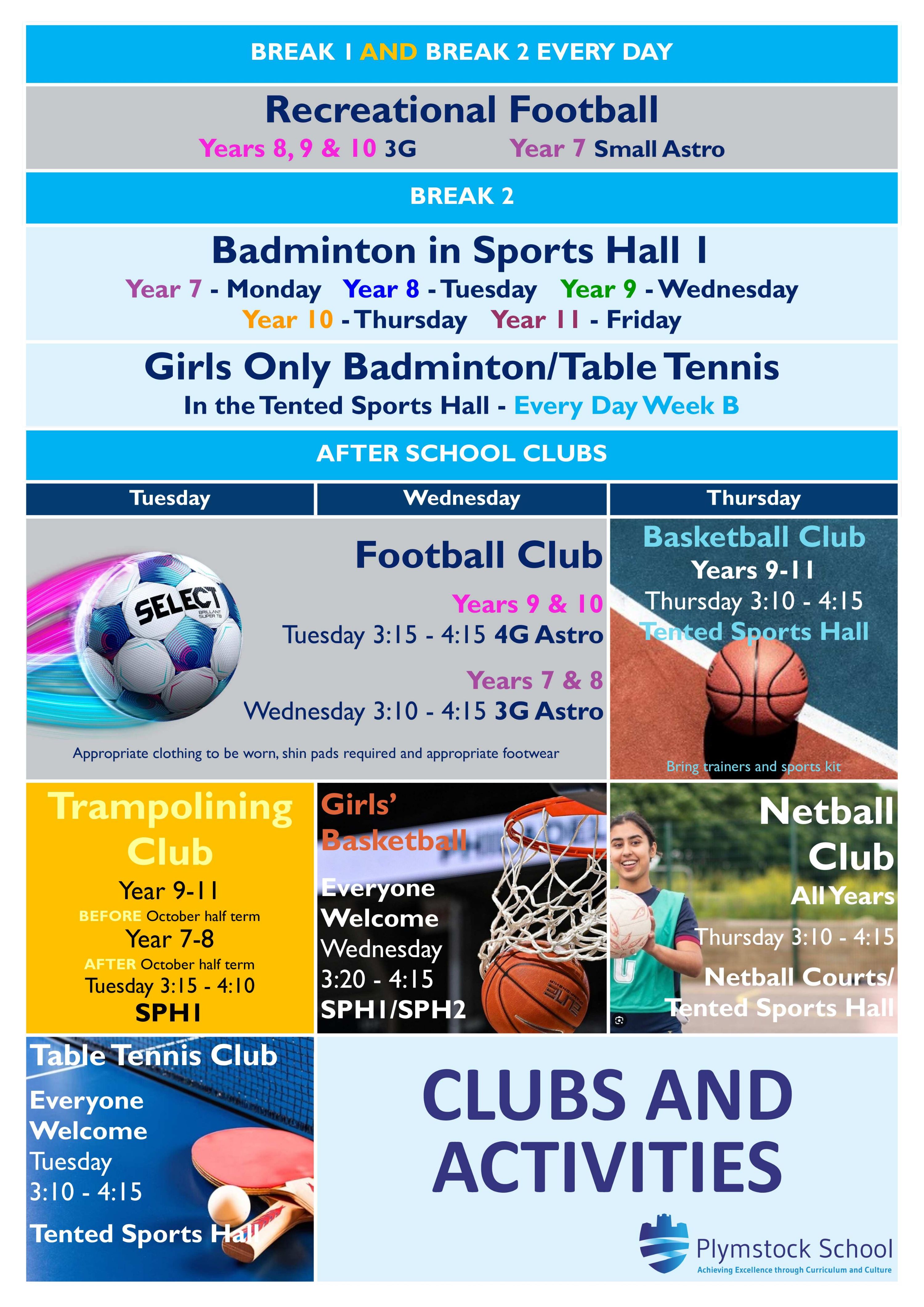
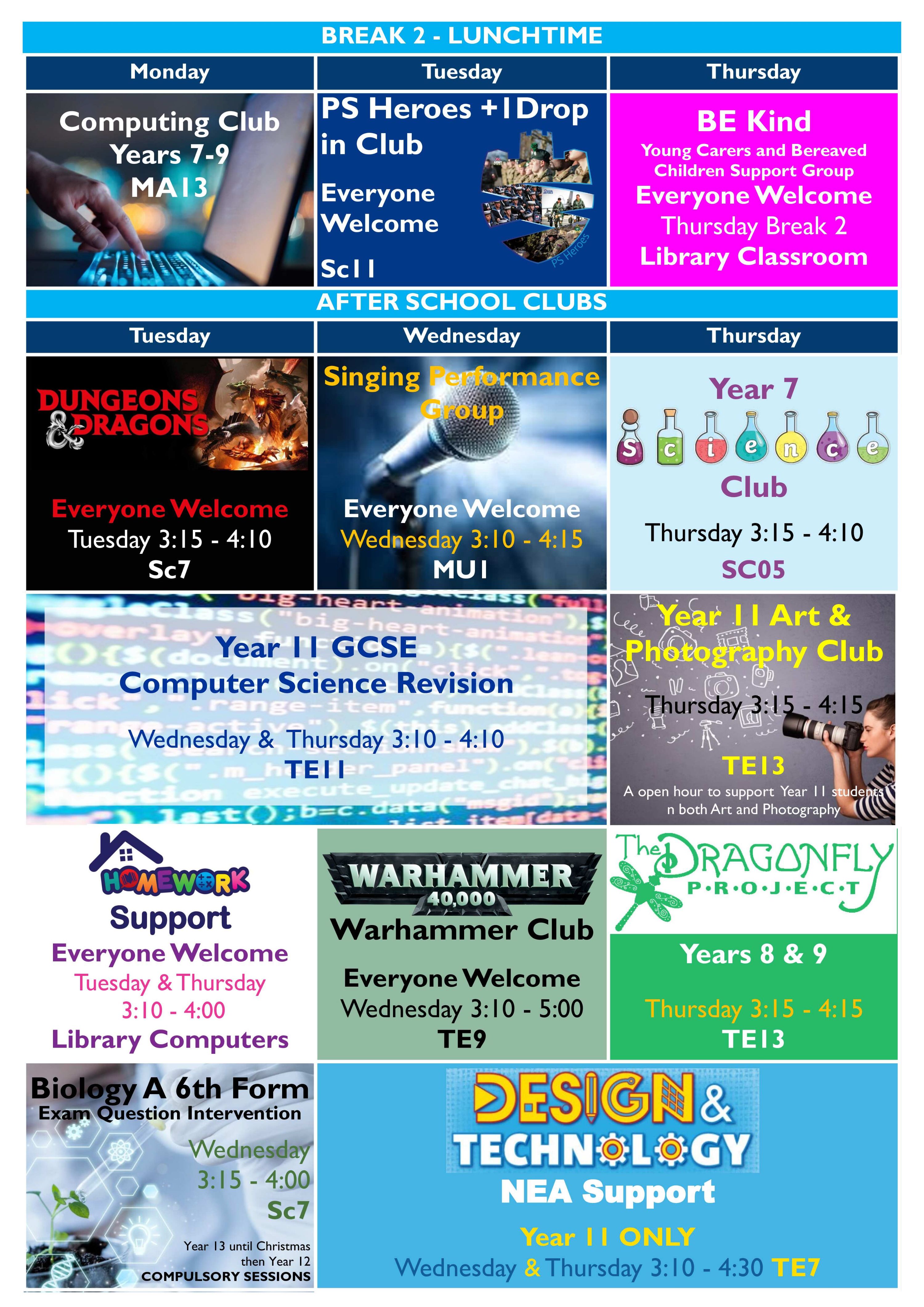
Extra Curricular and Enrichment Programme
Hands Off' Approach
Our school is introducing a “Hands-Off” expectation to ensure that every student feels safe and respected. This means students must avoid any physical contact, including pushing, play fighting, physical “banter,” unwanted attention, or inappropriate touching. Physical or aggressive behaviour can cause harm, disrupt learning, and make others feel unsafe. By keeping hands off, we prevent bullying, promote respect for personal space, and create a positive learning environment. This expectation also helps us include everyone, as comfort levels vary, and teaches better ways to resolve conflicts. Please support us in reinforcing this expectation at home so that together we can maintain a safe and respectful school culture.
Hot Weather Arrangements
During periods of high temperatures:
- The school may declare a “Non-Blazer Day”
- Students may remove blazers during the day
- All other uniform expectations remain in place
- Students should still bring their blazer unless told otherwise, as weather can change.
These adjustments ensure student comfort and wellbeing while maintaining standards
Information concerning Uniform Correction Button
Uniform is an important part of our school identity. It promotes a sense of inclusion for all students, encourages self-awareness and mutual respect, and helps prepare students for future careers where uniforms or dress codes are common.
Following feedback from parents and carers, we introduced a Uniform Correction button on ClassCharts earlier in the academic year. This complements the supportive systems already in place to help students meet our uniform expectations.
Each term, we:
-
Share clear uniform expectations with students and reinforce them through regular announcements.
-
Have staff meet and greet students each morning, supported by signage and polite reminders at the school entrance, helping students meet expectations from the start of the day before entering the school site.
-
Ensure staff welcome students at the threshold of lessons, supporting them to meet expectations and settle quickly into learning.
-
Continue to positively recognise students who wear their uniform correctly.
Following a review of this approach, we have identified that some students require more frequent reminders throughout the day.
From Term 5, staff will use the Uniform Correction button on ClassCharts each time a student needs a polite reminder to adjust their uniform. This will help keep parents and carers informed and strengthen the partnership between home and school in supporting students to meet expectations consistently. This will also support with staff being able to connect through positive conversations as opposed to correcting uniform.
The ClassCharts notification simply indicates that a student has needed a reminder from staff about wearing their uniform correctly. This ensures that families are aware when reminders are needed and allows us to work together to support students who may require additional guidance beyond the daily support systems outlined above.
Please note that this button does not affect a student’s points (it is currently worth 0 points). Its purpose is purely to support communication with families and to allow staff to address uniform expectations positively and consistently when reminders are needed.
Mental health expert says spending too much time online is leading to 'popcorn brain'
"Popcorn brain" is a term coined by researcher David Levy in 2011 to describe the feeling of mental restlessness and scattered attention caused by excessive, rapid-fire consumption of digital content on mobile phones. Mimicking the sound and motion of kernels popping in a microwave, the brain becomes accustomed to jumping quickly from one stimulus to another—such as scrolling through TikTok, checking emails, and switching between apps—resulting in a weakened ability to concentrate on slower-paced, offline activities. This condition is driven by constant dopamine hits from social media algorithms, which condition the brain to crave immediate gratification and frequent interruptions, leading to shorter attention spans, lower productivity, and increased anxiety.
Research indicates that the mere presence of a smartphone, even if turned off, can significantly impair performance on cognitive tasks by dividing a student's attention.
Symptoms of ‘popcorn brain’
They include a persistent need for stimulation, difficulty focusing on tasks, and mental fatigue.
Plymstock School is a phone-free school. This is an effective strategy to counteract the "popcorn brain" effect, as removing these devices creates a focused environment essential for deep learning and cognitive development. It also helps keep students and staff safe in an environment focused on social interaction and learning.
By eliminating constant digital interruptions, students are helped to move away from a state of scattered awareness toward sustained concentration, which has been linked to improved test scores, particularly for low-achieving and disadvantaged students.
Online Safety
Keeping your teenager safe online requires ongoing conversation rather than a one-off talk. While secondary school students need increasing independence to develop digital literacy skills, they're still navigating complex social dynamics, exposure to inappropriate content, and potential contact with strangers who may not have their best interests at heart.
Start by creating an environment where your child feels comfortable coming to you with concerns, whether that's cyberbullying, pressure to share images, or something that made them uncomfortable online. Set reasonable boundaries together around screen time, social media use, and which platforms are appropriate, but also explain the reasoning behind these rules so they understand the real risks.
Familiarise yourself with privacy settings on the apps and games they use and have honest conversations about the permanence of digital footprints, the importance of protecting personal information, and how to recognise manipulation or grooming behaviours.
Most importantly, model healthy digital habits yourself and stay engaged with their online world, not through invasive monitoring that breaks trust, but through genuine interest in what they enjoy and regular check-ins about their experiences.
In order to protect children, it is helpful to reinforce age restrictions for the various platforms so that they are not exposed to content that is not age appropriate.
Parent/Carer–School Partnership
We value your continued support. Strong partnerships between home and school help us to promote high standards through our CORE values: Conduct, Organisation, Respect, and Effort.
Please refer to Appendix A in the Culture & Expectations Policy for ways you can support your child and the school in maintaining a safe and effective learning environment.
If you have any questions or would like further clarification on these changes, please do not hesitate to get in touch with your child’s Pastoral Team. LINK
Punctuality Strategy
From Tuesday 24 February we will be introducing an update to our punctuality strategy.
Students who arrive late to school without a valid reason will be required to attend a 20‑minute after‑school detention from 3:10–3:30pm on the same day. Punctuality is an important life skill which helps young people to learn how to organise their time, it can reduce anxiety, builds confidence and develop a sense of responsibility. Being on time also prevents disruption to education activities during tutor time and ensures that students don’t miss out on the benefits of their tutor programme supporting the development of reading, personal development or English/Maths at key stage 4.
Students should be on school site for 08:35am, ready to start their day 08:40am. Any student who arrives after 08:40am will a be given L mark, a negative point on class charts and required to attend a detention in Eco 2 after school as well as spending tutor in the late room.
The overwhelming majority of our students arrive either ahead of the start of or on time for school. The amended approach is designed to help students establish and embed positive habits by reinforcing expectations promptly and clearly and allows students time to reflect. Alongside this approach, we will continue to support punctuality by monitoring patterns and offering intervention where needed, working with families to remove barriers to lateness and recognising improvements in punctuality. We appreciate your support to reinforce the importance of punctuality. Please remember that we are here to help and guide families in overcoming any barriers to timely attendance, so do not hesitate to reach out if you need help or advice.
Punctuality to Lessons
Punctuality is vital to student success. Arriving late to lessons disrupts learning, and over time, repeated lateness can significantly impact a student's progress as well as that of their peers.
Reminder: School starts with students needing to be at their tutor room by 8.40am. We recommend they are on site by 8.35am to ensure they are on time.
To support punctuality:
- First Bell: Rings 5 minutes before tutor time (08:35) and at the end of Break 1 (11:35) and Break 2 (14:05), signalling students’ movement time.
- Lesson Start: Students have an additional 2-minute window to arrive in lessons. During this time, late arrivals will receive a negative point on ClassCharts.
- Second Bell: After 7 minutes (from the movement bell or transition from Period 1 to 2, 3 to 4), students arriving without a permission slip will be marked as significantly late and referred to Reset.
Support:
- Staff meet and greet students at the school entrance to support a prompt start to the school day
- Staff will meet and greet students at the classroom door to support a prompt and positive start to lessons.
- New Year 7s are supported by mentors to escort them to lessons during their transition period.
- New students joining mid-year are given a buddy to help them settle in and navigate the school.
Punctuality to School
Punctuality supports a calm, well-organised, and disruption-free start to learning.
Punctuality is vital to student success. Arriving late to school disrupts learning, and over time, repeated lateness can significantly impact a student's progress as well as that of their peers.
School starts at 8.40 am – School gates are closed and locked. (Main entrance gates are staffed from 8.20 am supporting student entry into school) This is for safeguarding reasons.
Students are expected to arrive on site by 8:35am and be in tutor at 8:40am.
To support punctuality to school:
- Movement Bell: Rings 5 minutes before tutor time (08:35)), signalling students’ movement time to tutor.
- Lesson Start: Students have an additional 2-minute window to arrive to their tutor. During this time, late arrivals will receive a negative point on ClassCharts.
- Significantly late: After 7 minutes (from the movement bell), students arriving without a permission slip will be marked as significantly late and referred to Reset.
Support:
- Staff meet and greet students at the school entrance to support a prompt start to the school day
- Staff will meet and greet students at the classroom door to support a prompt and positive start to lessons.
- New Year 7s are supported by mentors to escort them to tutor during their transition period.
- New students joining mid-year are given a buddy to help them settle in and navigate the school.
- Attendance Team will communicate with parent/carers where there is an ongoing punctuality to school concern to discuss barriers and support to enable the student to meet the expectation.
Late to School (After 8:40am):
- Students arriving late enter via the ECO gate and go to the late room until 9:10am.
- They receive an “L” (late) mark.
- Same-day afterschool detention is issued unless there is a valid reason.
Graduated response consequences (per half term):
- First occasion per half term: Afterschool detention (3.10–3.30pm).
- Second occasion per half term: Afterschool detention (3.10–3.30pm) + parent/carer communication (intelligence event).
- Third occasion per half term: Afterschool detention (3.10–3.30pm) + parent/carer communication (intelligence event) + positive punctuality card
- Subsequent occasions per half term: Reset referral (following day) + parent/carer contact
Failure to attend detention:
- 1st: Detention set for next day
- 2nd: Reset referral (next day)
Failure to attend Reset
- Internal Reflection
Significantly late to school
- Is arriving at school after 9.10am
- Students will be marked with a “U”code (unauthorised absence)
- Referred to Reset unless there is a valid reason
Reading Ruler Term 4
As part of our ongoing commitment to developing confident, fluent and accurate readers, we are reinforcing the consistent use of Reading Rulers during all reading sessions across the school during the Spring and Summer Terms. Students will be given these at the start of next term, and staff provided with CPD on how to effectively use them.
Reading Rulers are a simple but highly effective tool that help students track text more accurately, reduce visual distractions on the page, and maintain a steady reading pace. This supports both reading fluency (the speed and flow of reading) and reading accuracy (minimising skipped words or line losses). Together, these are key foundations for strong comprehension and overall literacy development.
Why we use Reading Rulers?
- Improved Focus: They help students concentrate on one line of text at a time, reducing overwhelm and visual stress.
- Better Accuracy: Prevents losing their place, skipping lines, or misreading words.
- Increased Fluency: Supports a smoother, more confident reading rhythm.
- Accessible for All: Particularly helpful for students with SEND, dyslexia traits, or visual processing difficulties, but beneficial for every learner.
How students will be expected to use them:
- Every student will have a Reading Ruler in lessons where reading takes place.
- Staff will explicitly model how to use them to track the line being read.
- Students will be reminded to use their rulers consistently in guided reading, independent reading, and across the curriculum when reading extended text.
Use of Reading Rulers will become a routine expectation, similar to having the correct equipment for learning.
Reporting Student Absence
From September the MyEd app for reporting student absence will no longer be in use.
Student absence should be reported each day they are absent from school by 08:30am by either leaving a voicemail (402679 - option 1) or emailing studentabsence@plymstockschool.org.uk.
Significantly Late Approach
Across the school we have seen a vast improvement with students arriving to their lessons on time. We now wish to support students to improve their punctuality arriving at school and then to tutor and P0.
Punctuality is an important life skill which helps young people to learn how to organise their time, it can reduce anxiety, builds their confidence and develops their sense of responsibility.
Students should be on school site for 08:35am, ready to start their day 08:40am. Any student who arrives after 08:40am will need to enter through the Eco gate and they will be issued with a L mark and will spend tutor time in the late room.
If a student arrives after the morning register closes at 09:10am without a valid reason—such as a medical appointment—they will receive:
- A Significantly Late Negative Point on ClassCharts
- Time in Reset
- An unauthorised absence (U) mark for the morning session
We appreciate your support to reinforce the importance of punctuality. Please remember that we are here to help and guide families in overcoming any barriers to timely attendance, so do not hesitate to reach out if you need help or advice.
Super 7 - Being Ready to Learn
Being equipped for learning is essential. Asking to borrow equipment disrupts lessons and prevents students from developing good organisational habits.
We expect all students to have the Super 7 items every day:
- 1 black pen, 1 green pen, 1 pencil, 1 ruler, 1 eraser, 1 highlighter, 1 scientific calculator
- Year 7 & 8: Also require a reading book for tutor time.
Equipment is checked during morning tutor time. If an item is missing, a neutral (zero) point will be recorded on ClassCharts so parents/carers are informed.
Uniform and Culture & Expectations Policy Aims
Our Uniform and Culture & Expectations policies are in place to provide clarity and guidance about the expectations of Plymstock School.
Consistency of approach and a collective responsibility for managing behaviour is likely to lead to even higher standards. The consistent aims of our Culture & Expectations Policy are:
- To eliminate disruptive behaviour, enabling all students to focus on their work.
- To support a school-wide system that fosters a positive, orderly learning culture.
- To encourage courtesy, consideration and mutual respect among all.
Our school uniform is:
- An important part of our identity and helps to support promoting an ethos of inclusion for all students;
- Used to encourage an atmosphere of self-awareness and mutual respect;
- In place to prepare students for future careers and workplaces where there are often uniform requirements or dress codes;
- Used to promote Plymstock School in the community through wearing our uniform with pride.
Uniform and Behaviour Policy Aims
Our Uniform and Behaviour policies are in place to provide clarity and guidance about the expectations of Plymstock School.
Consistency of approach and a collective responsibility for managing behaviour is likely to lead to even higher standards. The consistent aims of our Culture & Expectations Policy are:
- To eliminate disruptive behaviour, enabling all students to focus on their work.
- To support a school-wide system that fosters a positive, orderly learning culture.
- To encourage courtesy, consideration and mutual respect among all. LINK
Our School uniform is:
- An important part of our identity and helps to support promoting an ethos of inclusion for all students;
- Used to encourage an atmosphere of self-awareness and mutual respect;
- In place to prepare students for future careers and workplaces where there are often uniform requirements or dress codes;
- Used to promote Plymstock School in the community through wearing our uniform with pride. LINK
Uniform Correction
From September 2026, uniform corrections will be recorded as a negative point on ClassCharts and will no longer be 0 points.
It is important to recognise that the vast majority of students consistently meet expectations, responding positively to guidance this year and wearing their uniform correctly and with pride.
This enhancement is intended to support uniform being worn correctly, ensuring clear communication and consistency for all.
Uniform 26-27 Reminders
- Wear full uniform with pride and correctly
- Pleated skirts are required in Years 7–11 where the skirt option is selected
- Bring a rucksack with essential items: Super 7, snacks, PE kit
- One single stud earring per ear only (nose piercings are not permitted)
- Nails must be natural colour and fingertip length
- Only natural hair colours permitted
- Shoes must be flat, black leather or leather-look (no trainers, boots, suede or canvas)
- Wear socks or tights (not both)
- Ensure funds are available if purchasing from the Galley
- Electronic devices must be off and in rucksacks before entering school and only used after leaving the school site
Uniform Support Room: Available for students missing correct uniform (includes blazers, ties, shirts, trousers, skirts, socks, shoes, rucksacks, etc.)
Use of Handheld Metal Detector Wands
o maintain safety, uphold exam integrity and enforce our electronic device policy, we will be using handheld metal detector wands in the following ways:
1. During Exams
- Wands may be used on all students or random selections (e.g. every 5th student) before entering the exam hall.
- Purpose: To prevent malpractice and protect academic integrity.
- Devices like phones and smartwatches are prohibited and may be detected during screening.
2. Beyond Exams
- During toilet visits in lesson time
- Before entering Behaviour Rooms
Please note: this is a screening process, not a search. If a student refuses screening, a staff member will assess the situation carefully.
Authorised staff members include: the Headteacher, Deputy/Assistant Headteachers, the Designated Safeguarding Lead and Deputy, Heads of Year, and the Behaviour Lead.
Confiscation: Any prohibited or inappropriate items found may be confiscated, in line with school policy.
Great British Summer Savings
Rising prices can make life's little treats harder to afford, especially during the school holidays when costs build up for families. This Government is determined to help, and that is why last month the Chancellor announced the Great British Summer Savings scheme.
From 25 June to 1 September 2026, the Government is temporarily cutting VAT from 20% to 5% on children's meals in restaurants, children and family tickets to cinemas, theatres, concerts and exhibitions, and admission to a wide range of attractions. Combined with free bus travel during August for children aged 5 to 15 in England, families and young people will be able to enjoy experiences that make summer special, including visits to the kinds of cultural and educational attractions that enrich children's lives outside the classroom.